

Leschetizky’s Famous Piano Students
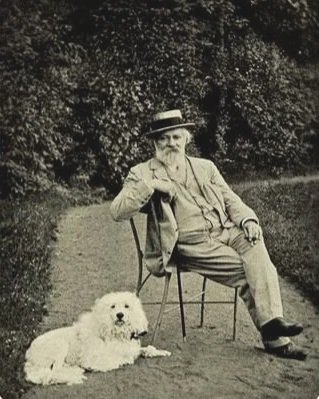
Theodor Leschetizky
Theodor Leschetizky
(June 22, 1830 - Nov. 14, 1915) Leschetizky was the most famous piano teacher during the last three decades of his life, which concluded in 1915.
Born in Luncut, at that time controlled by Austrian Galicia (now southeastern Poland). Leschetizky had the advantage of being raised in a musical household; his father was a pianist who gave him his first lessons, and his mother was a skilled singer.
Leschetizky, in his childhood, became a student of Carl Czerny, a profoundly important teacher who taught not only Leschetizky but also Franz Liszt and Sigismond Thalberg. When only eleven years old, Leschetizky performed Czerny’s piano concerto under the baton of Franz Xavier Wolfgang Mozart, the son of the immortal composer.
Leschetizky achieved a high level of virtuosity and performed in concert during his twenties and thirties, but found greater satisfaction in teaching. Anton Rubinstein invited Leschetizky to teach in St. Petersburg, where he taught for twenty-five years and was one of the founders of the St. Petersburg Conservatory of Music. He returned to Vienna in 1878, and students from around the world came to his private teaching studio.
Leschetizky’s remarkable career as the leading piano teacher of his era saw him mentoring at least 1,200 students. While a full list of Leschetizky’s piano students isn’t possible, the list of concert pianists below gives a wonderful glimpse into the diverse and inspiring group of musical talents he nurtured.
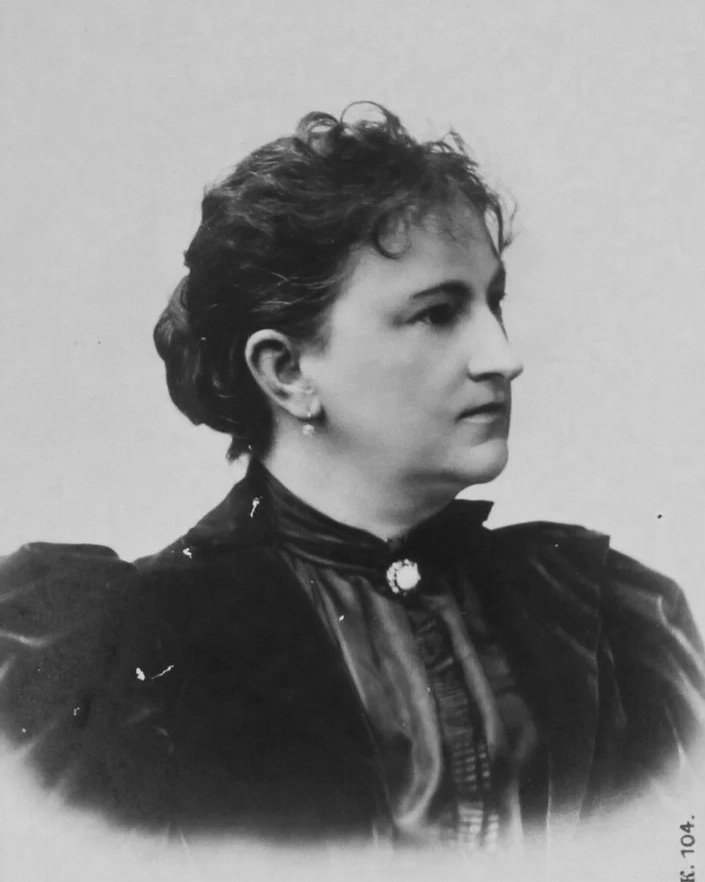
Anna Yesipova
Anna Yesipova
(Jan. 31, 1830 - Aug. 5, 1915) Often spelled Annette Essipoff, was one of Leschetizky’s most successful and highly respected students. She also made a name for herself as one of the world’s most admired piano teachers. Originally from Russia, she studied with Leschetizky at the St. Petersburg Conservatory. Later on, she became a faculty member there and taught renowned musicians like Sergei Prokofiev, Maria Yudina, Isabelle Vengerova, Leo Ornstein, Alexander Borovsky, and many other talented artists.
Her playing earned admiration from the world's greatest musicians, and even though she might not have been a top box-office hit on the concert circuit, her reputation remained highly respected throughout her life. She was celebrated for her seemingly effortless mastery of the keyboard, her warm singing tone, and her graceful phrasing. Essipova was also the second wife of Leschetizky (married 1880-1893), and together they had two children.
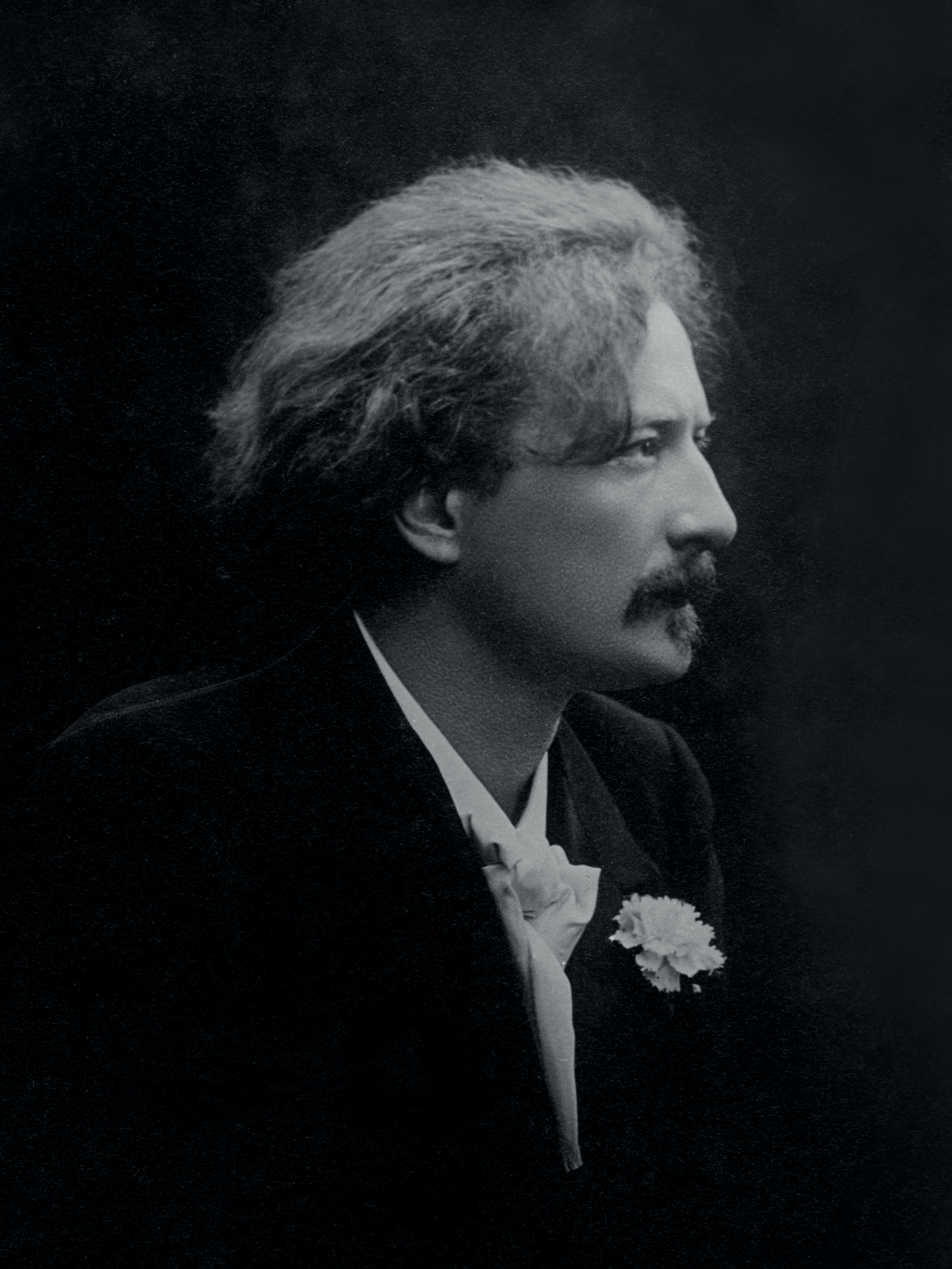
Igance Jan Paderewski
Ignace Ian Paderewski
(Nov. 18, 1860 - June 29, 1941) After studying with Leschetizky in 1884 and sporadically thereafter through 1887, Paderewski rapidly became the leading matinee idol of the concert world and, along with Franz Liszt, the most publicized pianist in history. Paderewski’s superstar popularity, particularly among younger, love-struck female fans, also brought fame to his teacher, and young pianists around the world rushed to study with Leschetizky.
Paderewski’s popularity with the public endured to the very end of his life. He became the most financially successful pianist of all time and was known for his generosity to many charitable causes. A dedicated composer not only of piano music but also of opera and symphonic forms, he wrote Menuet á l’Antique, opus 14, no. 1, which became universally studied by piano students around the world. In his only cinematic role, in the film Moonlight Sonata, Paderewski can be seen performing it shortly before his retirement from the stage.
Paderewski was an unsurpassed showman on the concert stage, radiating magnetism, mystery, and glamour. An assessment of his lifelong career reveals that he possessed nothing less than a genius for career promotion, publicity, and crafting a larger-than-life public image that became a legend.
A steadfast advos political independence from Russian and German influence, Paderewski secured his legacy in Polish history by representing his country at the signing of the Treaty of Versailles, which recognized Polish sovereignty. He also served as Prime Minister of Poland for eleven months in an unsuccessful attempt to unite the bitterly fractious political parties. Afterward, Paderewski resumed his concert career and performed before more audiences than any pianist in history.
Paderewski’s performances in his later years were not on the same technical level as those of his ‘golden’ years, approximately between the ages of 30 and 45, somewhat diminishing his reputation among professional pianists, although the general public continued to adore him. But his earliest recordings of 1911-1912 reveal a pianist of formidable technical brilliance, power, variety of color, and overwhelming style.
Traveling in his private railroad car, with many servants, Paderewski’s arrival in towns and cities was regarded as a royal procession to be covered by the local press. Ultimately, Paderewski became more than a famous pianist; he was a cultural icon who, in his earlier years, embodied the extravagant joie de vivre of the Belle Époque era, and in later life he was revered as a statesman of majestic dignity.
Artur Schnabel
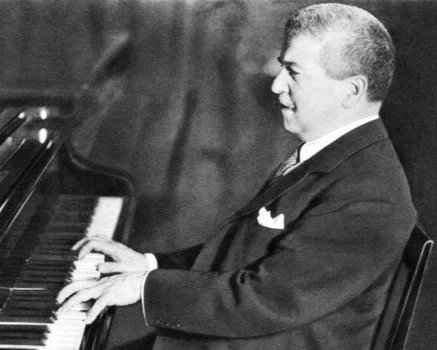
Artur Schnabel
(17 April 1882 - 15 August 1951) Born in Kunzendor, Austria (now Poland), earned international respect for his deeply thoughtful interpretations, especially of the works of Mozart, Schubert, Schumann, and Brahms. Above all, Schnabel was publicly identified with Beethoven, and his recorded performances remain a reference point for pianists today. Schnabel was the first pianist to record all 32 of Beethoven’s sonatas. Although Schnabel maintained a formidable technique, he had no interest in flamboyant displays of bravura, instead focusing on the intellectual and spiritual depths of the most substantial piano literature.
Schnabel’s parents moved the family to Vienna in 1884 so their children would have access to the best musical education. Arthur began lessons at age four and, at nine, began studying under Leschetizky, continuing for the next seven years, from 1891 to 1897. His fellow students at that time were Ossip Gabrilowitsch, Ignaz Friedman, and Mark Hambourg.
Schnabel’s masterclasses at Tremezzo, Italy, and later his teaching at the University of Michigan attracted many of the most talented young pianists, including Victor Babin, Clifford Curzon, Rudolf Firkusny, Leon Fleisher, Claude Frank, Lili Kraus, Adele Marcus, and Ruth Slenczynska, among many others.
Schnabel maintained an international career on both sides of the Atlantic and performed with conductors such as Arthur Nikisch, Furtwängler, Bruno Walter, Wilhelm Klemperer, George Szell, Mengelberg, and Adrian Boult.
He founded the Schnabel Trio and later played in a quartet with Gregor Piatigorsky, Paul Hindemith, and Bronislaw Huberman. He also performed with eminent violinists, including Joseph Szigeti and Carl Flesch, and with cellists Pablo Casals and Pierre Fournier.
The American composer Milton Babbitt categorized Schnabel, saying that “he was the thinking man’s pianist, and in spite of that was very popular.”
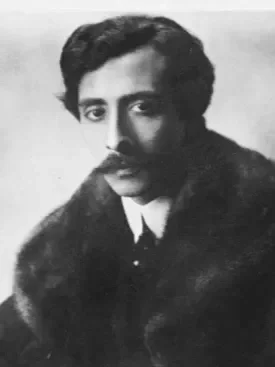
Ernest Schelling
Ernest Schelling
(July 26, 1876 - Dec. 8, 1939) was an American conductor and pianist. At age seven, Schelling was taken to Europe, where he was admitted to the Paris Conservatoire. His teachers included Hans Huber, Karl Barth, Moritz Moszkowski, and Leschetizky. In 1896, at age twenty, he began studying with Ignace Paderewski for three years, forming a close friendship that endured for the rest of his life. Afterward, he toured Europe and North and South America, receiving great acclaim.
During WW I, Schelling proudly joined the US Army, where he served in military intelligence and as an attaché at the American legation in Bern, Switzerland. As he gained experience and moved up in rank, he was honored with the Distinguished Service Medal after the war. He was also sent to Poland to work with Paderewski (who was then the Prime Minister), and his dedication and hard work earned him the prestigious Order of Polonia Restituta.
As a conductor, Schelling began the Young People’s Concerts with the New York Philharmonic in 1924, which continued for sixteen years. He was the conductor of the Baltimore Symphony Orchestra from 1935 to 1937.
Martinus Sieveking
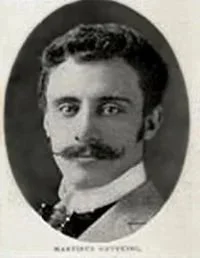
Marinus Sieveking
(March 24, 1867 - Nov. 26, 1950) was born into an aristocratic Dutch family and received his first lessons from his father, who was a choral conductor and published composer in the Netherlands.
In his early twenties, he performed as a soloist throughout Europe and the United States. His career was multifaceted, and he also toured as an accompanist to the soprano Adelina Patti, the cellist David Popper, and the British tenor Edward Lloyd. Rather incongruously, he was also the pianist and composer for the vaudeville acts of bodybuilder Eugen Sandow, with whom he lived as domestic partners in the 1890s. Due to his sometimes erratic and ‘flighty’ nature, he earned the moniker “The Flying Dutchman.” His temper led to at least two arrests during altercations with local officials.
Sieveking wrote various articles about the Dead-Weight Principle of piano technique that he promoted, which advocated a relaxed arm with the full weight from the shoulder down to be supported by each finger on the piano keys. Sieveking asserted that each finger must be trained independently to acquire articulation and strength.
Although he already possessed an advanced technique and a growing career before studying with Leschetizky in 1898, at the relatively advanced age of 31, the venerable master took a keen interest in Sieveking, noting the remarkable strength of his hands, which could span the interval of a 12th. Sieveking became one of his favorite students. Sieveking toured the United States in 1900-01, and over the next fifteen years he clarified his ‘Dead-Weight Principle, which calls for a very relaxed arm, with the weight of the arm and hand supported by each finger on the piano keys. His method called for each finger to be developed and strengthened independently.
Aline van Barentzen
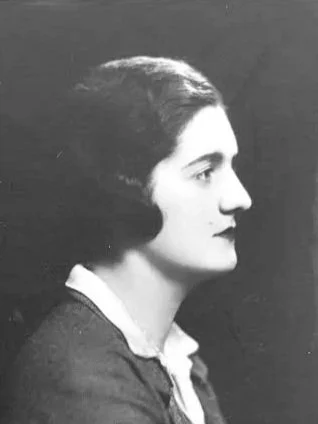
(July 17, 1897 - Oct. 30, 1981) was born in Somerville, Massachusetts, and took French citizenship in the 1930s. Exceptional even among child prodigies, she made her orchestral debut at age seven, performing Beethoven’s Piano Concerto No. 1. She entered the Conservatoire de Paris at age nine and, at eleven, was awarded First Prize in the Paris Conservatory piano competition. Her piano studies were completed with Leschetizky in Vienna.
As an adult, she was associated with the French avant-garde, performing works by Poulenc, Enesco, Roussel, Martelli, Florent Schmitt, and Villa-Lobos. In the 1930s, she became a citizen of France. After teaching in Philadelphia and Argentina, she became a professor of piano at the Paris Conservatory in 1954. Among her pupils were Cyprien Katsaris, Bernard Job, and Jean-Philippe Collard.
Fannie Bloomfield Zeisler
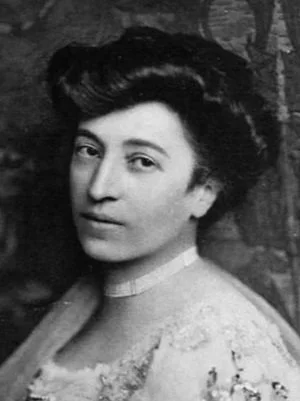
Fannie Bloomfield Zeisler
(July 16, 1863 - August 20, 1927) was born to a Jewish family in Bielitz, Silesia (now Poland). Her family emigrated to the United States in 1867. As a child prodigy, she made her debut in 1875 at the age of eleven. Encouraged by Annette Essipova, she began studying with Leschetizky at fourteen and continued until she returned to Chicago in 1883. In 1888, she traveled to Vienna again to continue her studies with Leschetizky.
Zeisler gained a worldwide reputation as one of the leading pianists of her generation, delighting audiences across Europe and the United States. Her exceptional technique perfectly complemented her passionate approach to the Romantic repertoire.
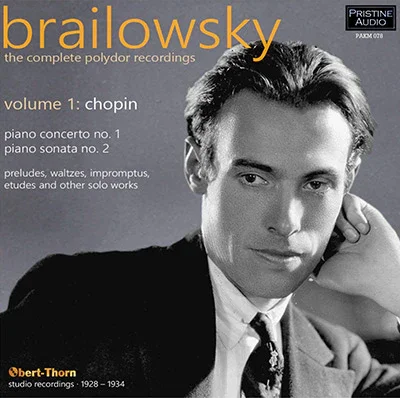
Alexander Brailowsky
Alexander Brailowsky
(Feb. 16, 1896 - April 25, 1976). Born in what is now Kyiv, Ukraine, he studied at the Kyiv Conservatory and graduated at fifteen with a gold medal. He then studied with Leschetizky in Vienna from 1912 to 1914. He later studied with Ferruccio Busoni and Francis Planté. In 1926, he became a citizen of France.
He later performed the complete works of Chopin in six recitals, a program he would repeat throughout Europe and the world. Although his artistry was associated with Chopin, his repertoire extended well beyond Chopin to include works by Liszt, Saint-Saëns, Debussy, and Rachmaninoff.
Ignaz Friedman
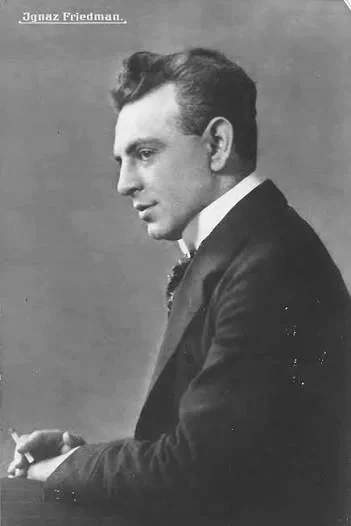
Ignaz Friedman
(Feb 14, 1882 - Jan. 26, 1948). Born in Podgórze, Poland, Friedman was a remarkable piano prodigy who, by the age of eight, could transpose Bach fugues effortlessly while sight-reading. He studied with Leschetizky in Vienna, although initially, Leschetizky suggested he consider a different career path.
A true exponent of the late Romantic style in piano performance, he crafted an exceptionally singing tone that conveyed deep artistry. His playing was not only elegant but also had a charming ‘stylized' quality by today's standards, paired with remarkable technique. While some might find his recordings a bit mannered, he was greatly admired for his Chopin interpretations. In fact, several of his recordings are celebrated as some of the most inspiring examples of interpretive artistry ever made.
He composed over 90 works for piano, as well as for cello, 37 songs, and a piano quintet. He settled in Australia to escape World War II and taught several successful students there. Friedman edited the complete works of Chopin for Breitkopf and Hartel.
Ossip Gabrilowitsch
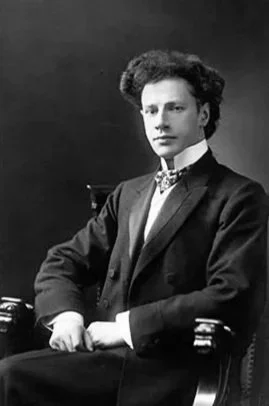
Ossip Gabrilowitsch
(Feb 7, 1878 - Sept. 14, 1936). Born into a Jewish family in Saint Petersburg, he studied with the great Anton Rubinstein and with Anatoly Lyadov, Alexander Glazunov, and Nikolai Medtner before studying piano with Leschetizky in Vienna.
Like Moiseiwitsch, he embodied the unforced power, elegance, singing tone, and nuanced control of Leschetizky’s influence and was often referred to as “The Poet of the Piano.”
Gabrilowitsch was among the first pianists to record for the Welte-Mignon reproducing piano, as well as for Duo-Art and Ampico. He was married to Clara Clemens, the daughter of the beloved author Mark Twain. Besides being one of the top concert pianists of his time, Gabrilowitsch was also highly respected as a conductor, starting with the Munich Konzertverein, and after moving to the United States, with the Detroit Symphony Orchestra.
Katherine Goodson
(June 18, 1872 - April 14, 1958) Goodson was born in Warford, England. Goodson entered the Royal Academy of Music at the age of 12. After graduating, at the behest of Paderewski, she began studying with Leschetizky in Vienna at age 20 and became one of his favorite students. Even after her studies with him concluded, he sought to further her career by arranging her American debut with the Boston Symphony Orchestra under Nikisch.
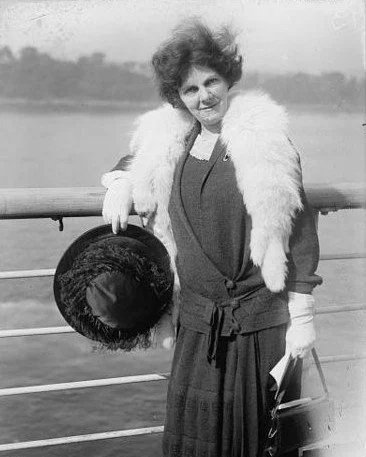
Katherine Goodson
Goodson was met with critical acclaim and toured North America several times thereafter. Nickisch praised her, saying, “I have known many artists during my life, and many soloists, but the true musicians I can count on the fingers of one hand: d’Albert, Ysäye, Paderewski, and to those you belong, Miss Goodson.”
During World War I, Goodson toured North America seven times, giving fundraising concerts for the Red Cross and Canadian prisoners of war. She performed with eminent conductors such as Vasily Safonov and Ossip Gabrilowitsch. Her long and successful career continued into the 1940s, performing with Sir Thomas Beecham and Ian Whyte, and appearing on both radio and television.
Benno Moiseiwitsch
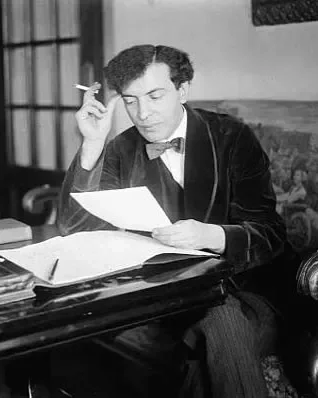
(Feb. 22, 1890 - April 9, 1963) From Odesa, Ukraine (Russian Empire), he studied with Leschetizky in Vienna from 1904 to 1908. He relocated to London and became a British citizen in 1937. Moiseiwitsch toured the United States, Australia, India, Japan, and South America extensively. His astonishing technique appeared completely natural and unforced.
He recorded extensively, leaving a legacy of pianistic technique and musical sophistication of the highest order. Moiseiwitsch’s artistry was particularly associated with Robert Schumann, a composer he admired above all others, whom he said possessed “more emotional and spiritual satisfaction than anyone else,” as well as with the music of Rachmaninoff, who admired his playing and called him his “spiritual heir.”
Mark Hambourg
(June 1, 1879 - August 26, 1960) was born in Russia in 1879. His father, Michael Hambourg, was a pianist who studied with Anton Rubinstein. The Hambourg family emigrated to England when Mark was 10 years old. As a child prodigy from a musical family, he made his London debut at 11 and was given many opportunities to perform.
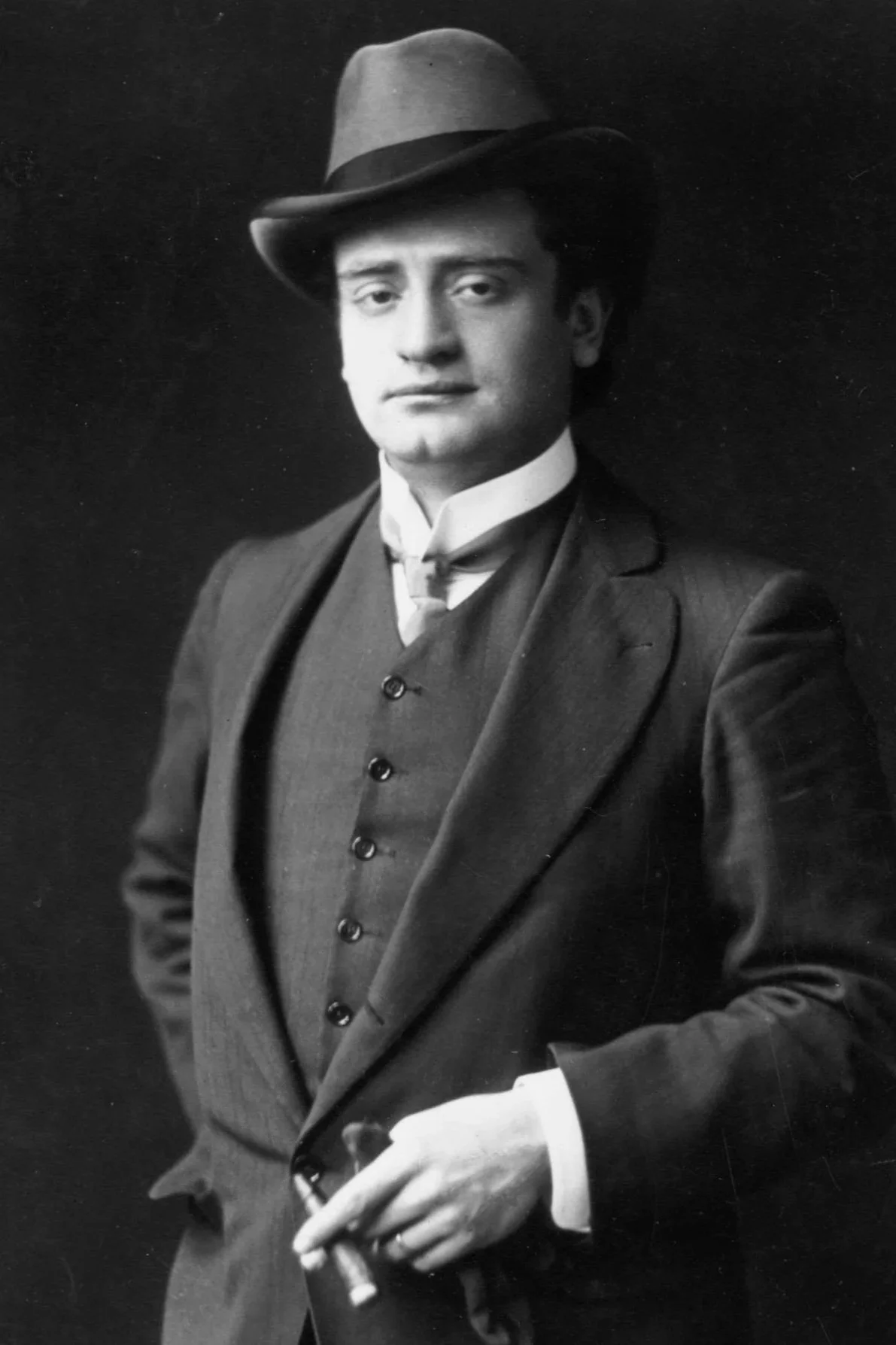
Mark Hambourg
With Paderewski’s financial backing, Hambourg studied with Leschetizky in Vienna for three years starting in 1891. As a young adult pianist, he made his debut performing Chopin’s Concerto No. 1 in E minor under conductor Hans Richter with the Vienna Philharmonic Orchestra. Hambourg’s last-minute replacement (at age 16) for Sophie Menter in Liszt’s Hungarian Fantasia with the Berlin Philharmonic in Vienna was a sensational success. At the banquet afterward, Brahms proposed a toast “to the youth who has played this evening.” His career took off immediately. During this period, the boy also met celebrities such as Oscar Wilde, Bernard Shaw, and Ellen Terry.
Hambourg was noted for his stupendous sonority, vitality, and grand virtuosity of the late Romantic period, and these qualities may have been the legacy of Anton Rubinstein, relayed through Mark’s father, as much as Leschetizky’s more controlled approach.
Mieczyslaw Horszowski
(June 23, 1892 - May 22, 1993). Born in Lwów, now in Ukraine, Horszowski was first taught by his mother, who had studied with Karol Mikuli, and at age seven became a pupil of Leschetizky in Vienna. At nine, he performed Beethoven’s Piano Concerto No. 1 in Warsaw and toured Europe and North America as a child prodigy. Born into a Jewish family, he later became a devout Catholic.
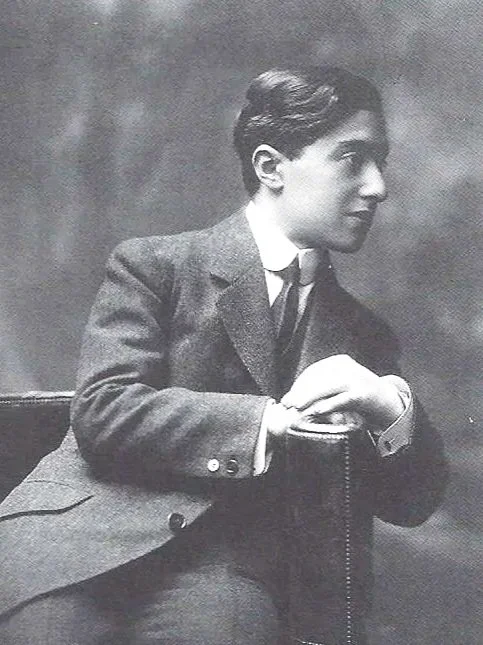
Mieczyslaw Horszowski
Only five feet tall, Horszowski had small hands that barely spanned an octave. However, as music critic Allan Kozin noted, “he turned this limitation into an asset by focusing on music written on a more compact scale and making intellectual rather than physical demands.”
Horszowski had the wonderful opportunity to perform alongside renowned artists like Pablo Casals, Joseph Szigeti, and the Budapest Quartet. He shared his knowledge as a beloved teacher at the Curtis Institute of Music in Philadelphia, where he mentored talented students such as Eugene Istomin, Seymour Lipkin, Richard Goode, Peter Serkin, and Murray Perahia. His passion for music and teaching remained vibrant well into his later years, with his last recital taking place in 1991 when he was 98, and he continued inspiring students even after turning 100.
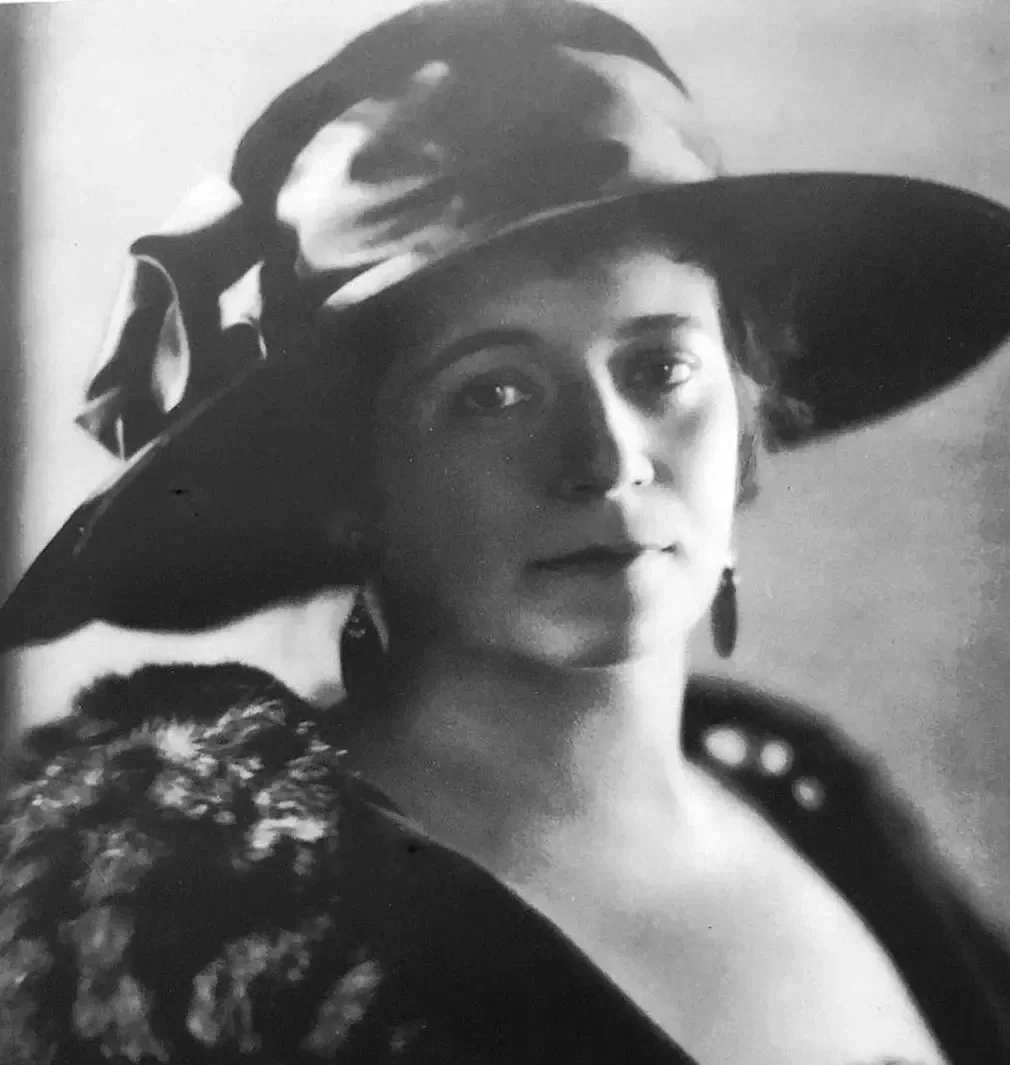
Isabelle Vengerova
Isabelle Vengerova
(March 1, 1877 - Feb, 7, 1956) was born in Minsk in the Russian Empire. She studied with Leschetizky in Vienna and with Anna Yesipova in Saint Petersburg, where she also became one of Yesipova’s trusted teaching assistants for several years.
She performed throughout the Soviet Union and Western Europe from 1920 to 1923, and thereafter emigrated to the United States, where she became a faculty member at the newly established Curtis Institute in Philadelphia, where she taught for over thirty years. She also taught at the Mannes College in New York City.
She became widely recognized not as a performer but as a teacher to many students, including Gary Graffman, Lukas Foss, Leonard Bernstein, Menahem Pressler, Leonard Pennario, Abbey Simon, Samuel Barber, and Ronald Turini. Demanding and tempestuous, Vengerova possessed a thorough knowledge of the piano repertoire and acute listening skills for all aspects of pedaling, chord balances, nuances of every description, and the ability to resolve technical issues.
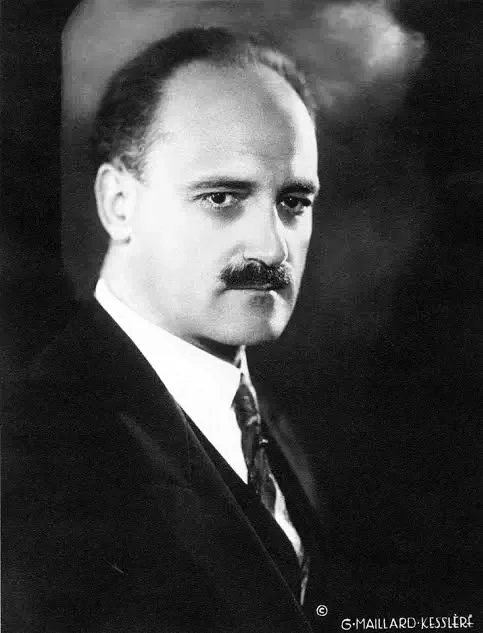
Edwin Hughes
Edwin Hughes
(Aug. 15, 1884 - July 17, 1965) was an American student of Leschetizky who built a career not only as a pianist but also as a music editor, educator, and composer. Working as Leschetizky’s assistant from 1909 to 1910, he gained a thorough understanding of his teacher’s approach. As he later wrote,
“If you were to ask Leschetizky about the ‘Leschetizky Method’, he would probably laugh and tell you he has no method, or he would tell you his ‘method’ consists of only two things - firm finger and pliable wrists. These are the principles upon which I base the technical training of my pupils.”