Leschetizky Speaks
In his own words, Leschetizky discusses his working philosophy for teaching piano.
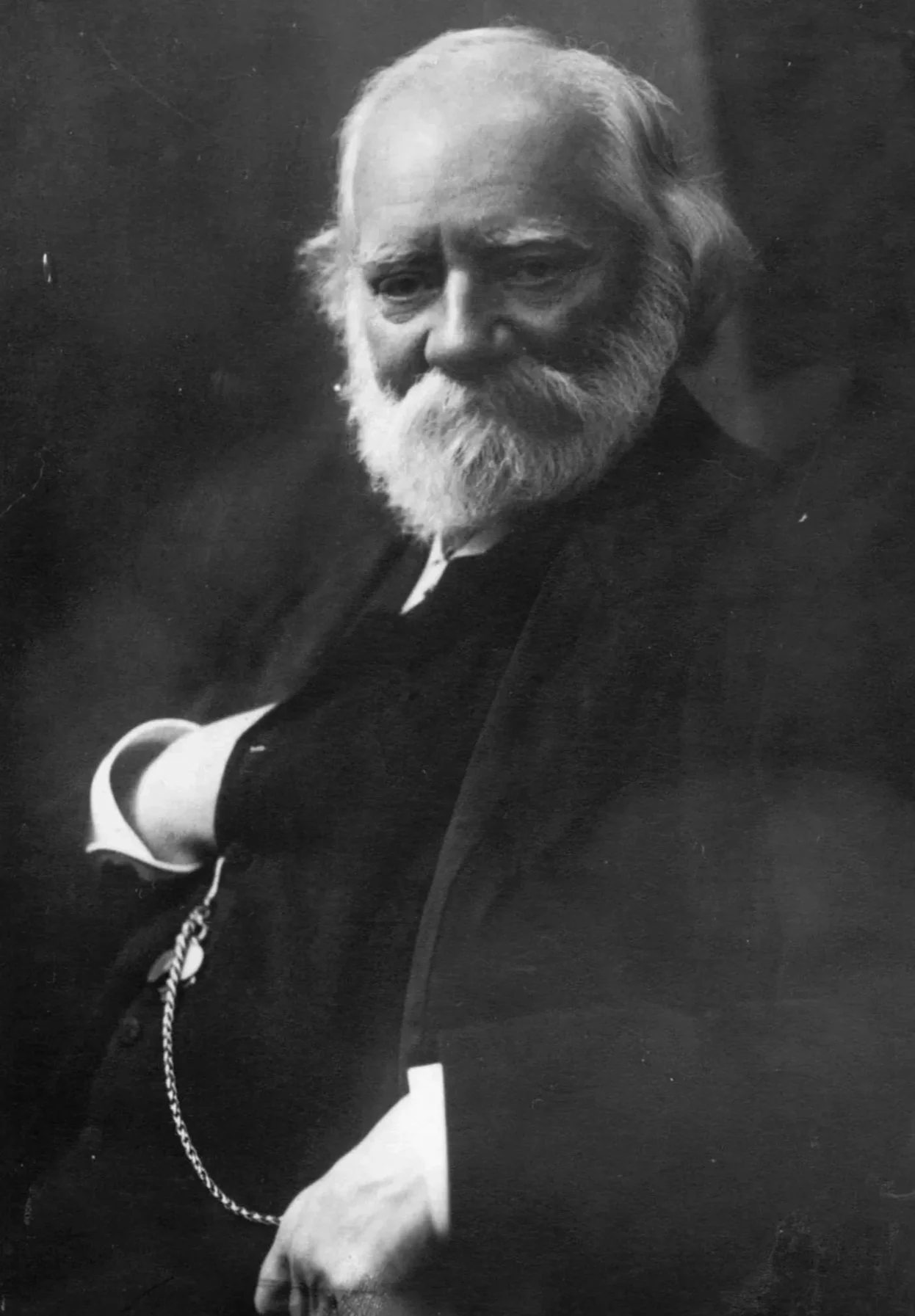
Theodor Leschetizky
From Leschetizky’s comments and aphorisms, listed below, you can gain a good sense of his personality, psychology, and values.
Although he adamantly insisted he had “No Method!” for teaching piano, Leschetizky clearly had intense aesthetic and musical priorities that he invested in his guidance to every student.
Without question, Leschetizky was a teacher of genius, and his legacy directly influenced the next four generations of pianists and piano teachers.
Complementing this article is the accompanying blog entry, “Leschetizky Method,” which publishes insights from his leading students. Together, these brief articles help clarify for the reader Leschetizky’s approach to guiding piano students toward their greatest potential.
LESCHETIZKY ON IDEALISM
“Be ideal, think ideally. We can all afford to cultivate that quality. Whether it makes you happier or not, it is worth the trouble to try to live ideally. If you think yourself a poor specimen, you will probably always reamin one, or most likely become one, but if you think of yourself as having the possibilities of greatness in you, there is a chance for you.”
MEMORIZATION
“When I want to learn a new piece, I do not keep the notes in front of me on the music rack; I throw them over the top of the piano, so that I have to get up every time to look at them. After the image of the passage is well memorized in my mind, I sit down at the instrument and try to reproduce it - notes, touch, pedaling, and all. Perhaps it doesn’t go the first time. Then I get up and take another look. This time, I make a more strenuous effort to avoid the trouble of having to stand up once more! This I call intelligent piano study; learn a passage just once; afterward, only repeat it.”
LENGTH OF PRACTICING
“No one can do that [excessive practicing] without being mechanical, and that’s just what I’m not interested in. Two hours, or three at most, is all anyone should require if he will only listen to what he is playing and criticize every note.”
“How many come to me and say, ‘I practice seven hours a day,’ in an expectant tone, as though praise were sure to follow such a statement! As I say so often in lessons, piano study is very similar to cooking. A good cook tastes the cooking every few minutes to see whether it is progressing properly; just so a piano student who knows how to study makes pauses constantly in his playing, to hear if the passage just played corresponded to the effect desired, for it is only during these pauses that one can listen properly.”

Theodor Leschetizky
LISTENING AND THINKING…
“I study for hours when I am walking alone in the night. I look far down the street and imagine a beautiful voice, and I learn that faraway pianissimo quality - that means attention.”
To his pupil Frank Merrick, “I advise you very often to stop and listen when you are practicing, and then you will find out a great deal for yourself.”
“When I eat mushroom or tomato sauce, I want to know that I am eating the one or the other. Some cooks' concoctions are neither one thing nor another, and they do not satisfy anybody when they come to the table. Nothing could better apply to piano study than this comparison. A pianist must be an epicure - that is just the expression for it. He must taste, and taste, and not eat all the time.”
“Out of four hours’ study, one who goes about his work properly will play perhaps only one-half of that time. The rest goes for pauses to think about what has gone before, and to construct the following passage mentally. This continual playing of a piece over and over again is not what I call study.”
“Decide exactly what it is you want to do in the first place, then how you will do it; then play it. Stop and think if you played the way you meant to; only then, if sure of this, go ahead. Without concentration, remember, you can do nothing. The brain must guide the fingers, not the fingers the brain.”
PREPARATION
“Of course, in the beginning, I have a method. A knowledge of correct hand position and of the many different qualities of touch which I use and which give a never-ending variety to the tone must be learned before one can go very far.”
“The fingers must have acquired an unyielding firmness, and the wrist, at the same time, an easy pliability in order to avoid harshness of tone. Besides this, there are the rules for singing, which apply to melody playing on the piano to just as great an extent as to the melody singing in the voice.”
“The natural accents must be properly placed, and long notes must receive an extra pressure in order to overcome the difficulty of sustaining tones on the pianoforte. All these things a good preparatory teacher can give as well as I, and for this reason, I require my pupils to go first to an assistant to save both their time and money. Of course, the assistants are responsible to me.”
“After pupils have once gotten this foundation, they branch off in every direction: each has his peculiarities, and no one method will answer for all any more; the teaching must become individual. The enforcement of strict rules cannot then be insisted upon. It is just as in law. Not everyone who kills his fellow man is hanged or guillotined or electrocuted.”
LESCHETIZKY & ‘THE METHOD’
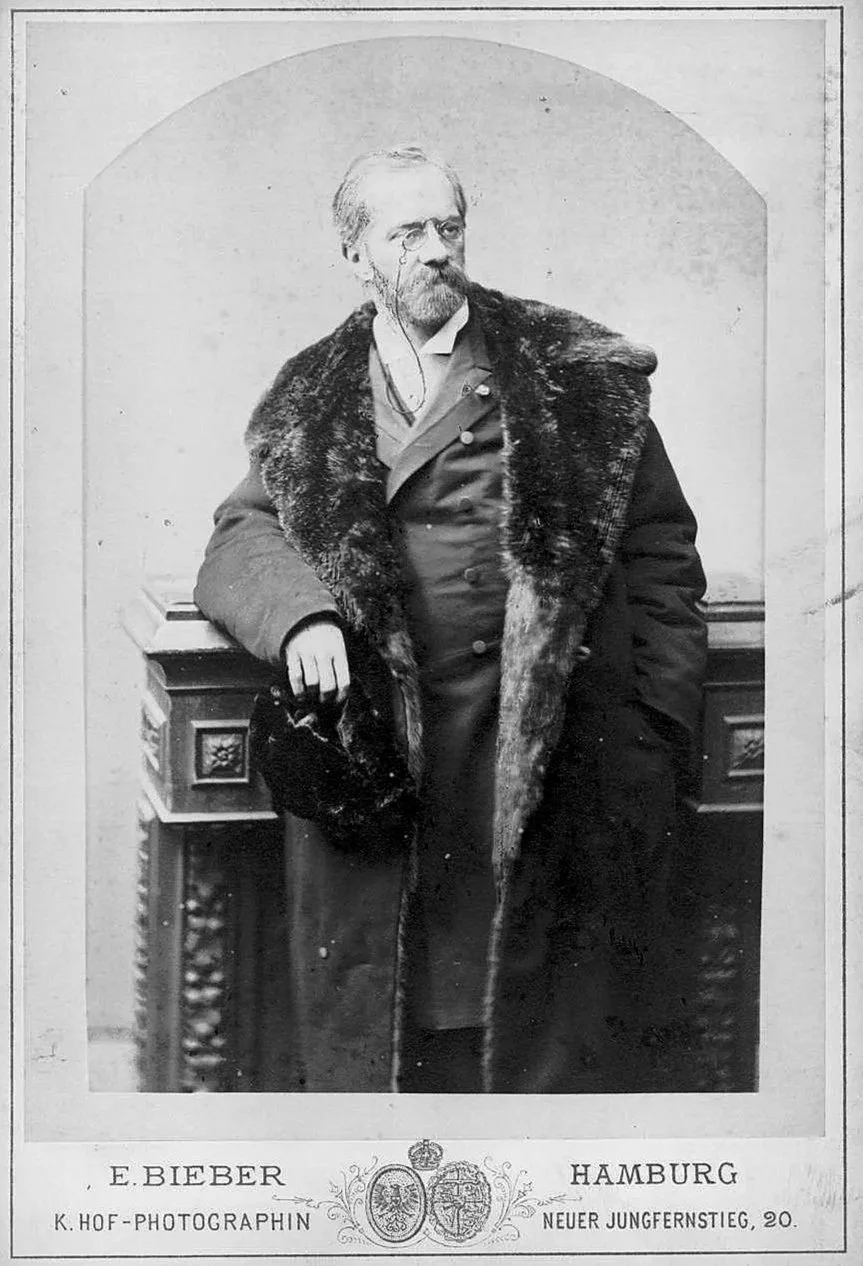
Theodor Leschetizky
“I am personally against any fixed principle in instruction. Every pupil must, in my opinion, be treated differently according to circumstances…My motto is that with a good, yes, a very good teacher, no printed method will be effective, and only he is a good teacher who can practically demonstrate every possibility to his pupils.”
“One pupil needs this, another that; the hand of each differs: the brain of each differs. There can be no rule. I am a doctor to whom my pupils come as patients to be cured of their musical ailments, and the remedy must vary in each case.”
“I have no technical method; there are certain ways of producing certain effects, and I have found those which succeed best, but I have no iron rules. How is it possible that one should have them? One pupil needs this, another that; the hand of each differs; the brain of each differs. There can be no rule.”
“I am a doctor to whom my pupils come as patients to be cured of their musical ailments. and the remedy must vary in each case. There is but one part of my teaching that may be called a ‘method’, if you like, and that is the way in which I teach my pupils to learn a piece of music. This is invariably the same for all, whether artist or little child; it is the way Mme. Essipoff studies, the way we study, and we have much talent.”
”I have no method, and I will have no method. Go to concerts and be sharp-witted, and if you are observing, you will learn tremendously from the ways that are successful and also from those that are not. Adopt with your pupils the ways that succeed with them, and get away as far as possible from the idea of a method. Write over your music room the motto: “NO METHOD!”
BREATHING
Of Anton Rubinstein’s playing, Leschetizky said, “…what deep breaths Rubinstein used to take at the beginning of long phrases, and also what repose he had, and what dramatic pauses. There is more rhythm between the notes than in the notes themselves. Rubinstein reminded me that Liszt used to say this. Paula Szalit is the only one who ever asked me to tell how Rubinstein breathed. No one else ever seemed interested to know.”
LESCHETIZKY’S APHORISMS
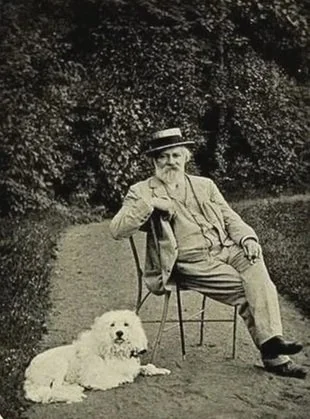
Theodor Leschetizky in his garden.
“No art without life, no life without art.”
“To make a pupil play three notes on the piano expressively and with a variety of touch, that is my method.”
“Sit at the piano unconstrained and erect, like a good horseman on his horse, and yield to the movements of the arms as far as necessary, as the rider yields to the movements of his horse.”
“To make an effective accelerando, you must glide into rapidity as steadily as a train increases its speed when streaming out of a station.”
“Teach yourself to make a rallentando evenly by watching the drops of water cease as you turn off a tap.”
“A player with an unbalanced rhythm reminds me of an intoxicated man who cannot walk straight.”
“Your fingers are like capering horses, spirited and willing, but ignorant of where to go without a guide. Put on your bridle and curb them in till they learn to obey you, or they will not serve you well.”
“If you are going to play a scale, place your hand in readiness on the keyboard in the same position as you would if you were going to write a letter - or take a pinch of snuff.”
“The bystander ought to know by the attitude of your hand what chord you are going to play before you play it, for each chord has its own physiognomy.”
“If you play wrong notes, either you do not know where the note is or what the note is.”
“If your wrists are weak, go and roll the grass in the garden. If you want to develop strength and sensitivity in the tips of your fingers, use them in everyday life. For instance, when you go out for a walk, hold your umbrella with the tips instead of in the palm of your hand.”
“Music begins where technique leaves off.”
QUOTATION SOURCES;
The Etude Magazine, April 1909, interview with Edwin Hughes.
London Sunday Telegram, reprinted in Piano Teacher, January-February, p.3, 1963.
Mme. Brée, The Groundwork of Leschetizky Method.
James Francis Cooke, Great Pianists on Piano Playing, p. 82-84.
New York Times, Memoir of Leschetizky, Dec. 7, 1930.