

Leschetizky Method
Nine of Leschetizky’s most successful students recall his personality and approach to teaching.
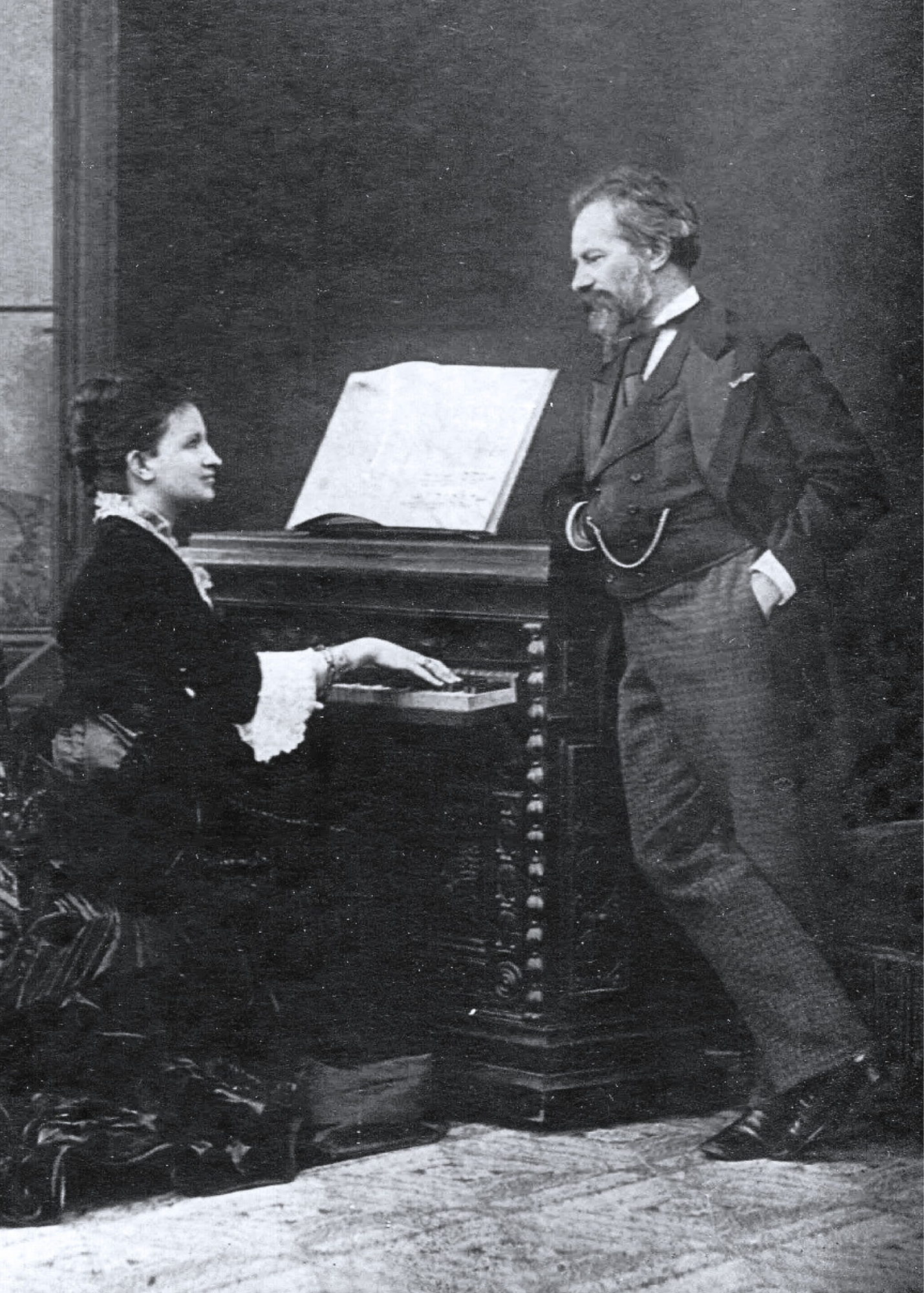
Anna Yesipova, concert pianist, with her husband, Theodor Leschetizky.
What was the method that Leschetizky employed to successfully shape the development of so many great concert pianists? This question has haunted pianists and teachers for generations.
The most esteemed piano instructor of the late 19th and early 20th centuries, Leschetizky demonstrated an ingenious ability to cultivate and inspire students to reach their highest potential. But, what was his ‘secret’? What did he do, and what did he say?
Leschetizky knew both Franz Liszt and Anton Rubinstein, the most brilliant keyboard virtuosos of the 19th century. And it was Rubinstein who invited Leschetizky to join him in forming the Saint Petersburg Conservatory, where he then taught for sixteen years. Leschetizky’s knowledge of the technique and performance practice of the greatest virtuosos was profound.
My ‘teacher’s teacher’ lineage traces directly from my teachers, Kochanski and Marcus, back to Lhevinne, to Safonov, and finally to Leschetizky. Yet, the passing of pianistic traditions can be obscured with time. And the value of these recollections directly from nine of his finest students offers considerable value to the discerning and inquisitive student who is seeking to enrich and deepen their musical craft.
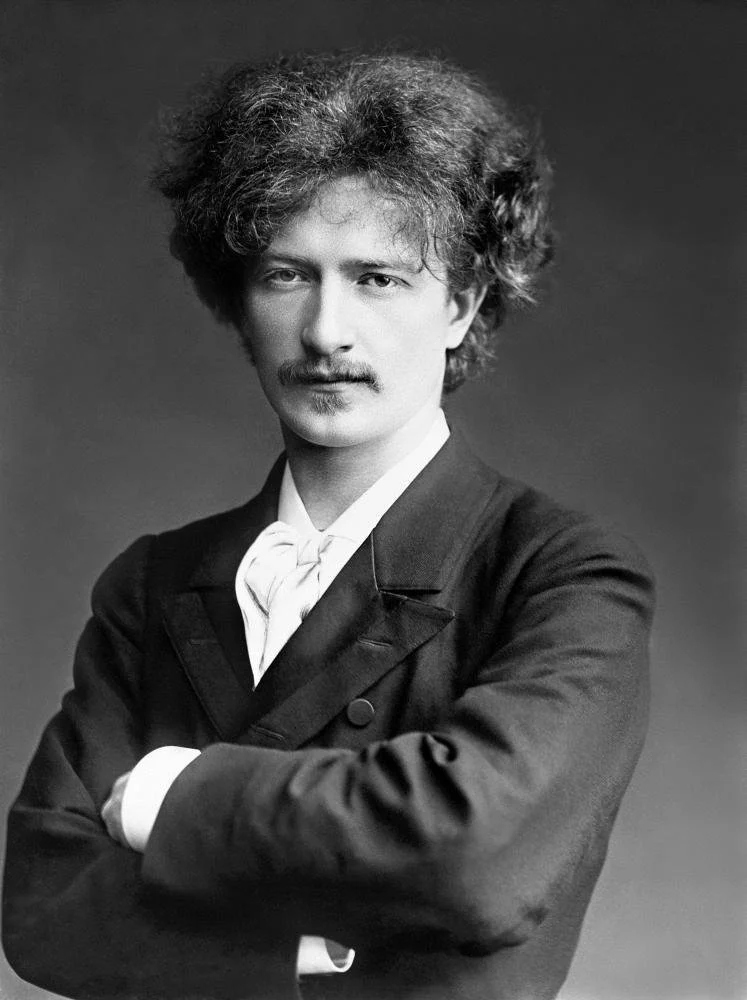
Ignace Jan Paderewski
Ignace Jan Paderewski
“The method of Leschetizky is very simple. His pupils learn to evoke a fine tone from the instrument and to make music and not noise.”
“There are principles, you will agree, that are to be uniformly inculcated in every pupil - breadth, softness of touch, and precision in rhythm. For the rest, every individual is treated according to the nature of his talent. In one word, it is the method of methods.”
“Before I came to Leschetizky, I had not the slightest idea of how to proceed with work, and he gave me that help. He talked a great deal - he showed me the way - he explained. That is the way he used to teach.”
“He opened up another world to me in my art. After those groping, struggling years, even in a few lessons, things became clear. I began to see, to understand, to find my way, to know how to work. And my thankfulness to Leschetizky is as great today as it was then. I cannot overestimate what he did for me in his indication of the way to work. It was masterly.”
“He fulfilled my heart’s desire. I had learned how to work. Yes, I repeat to you, how to work, and this is of the utmost importance. Leschetizky, the lodestar of my early years, the greatest teacher of his generation. I do not know of anyone who approaches him now or then. There is absolutely none who can compare with him. He was in that respect a giant - all those I know at present are pygmies, measured by these standards.”
“Leschetizky was not precisely a beautiful man in appearance, but he had a noble, impressive head. And there was a great deal of magnetism about him, and extraordinary intelligence, and he was a very highly educated man.”
“All his pupils could get some beauty of tone. That applies to everyone. Every one of his pupils could handle the piano in a musical way, i.e., produce a pleasing tone. They all had a singing tone. That was very, very important. Just as important also was the rhythm. They all, even those who had no sense of rhythm, played rhythmically after studying with him.”
“He was a wonderful man, of great brilliance. He taught me more in those few lessons than I had learned during the whole twenty-four years preceding that time. What was interesting about him was, first of all, the tone production, and then there was his attention to rhythm. That singing tone of his was really remarkable.” [1]
Ethel Newcomb
Ethel Newcomb
“Leschetizky would discuss the hand from every point of view; what this sort of hand should do, and why another kind of hand should be held differently and should be required to do otherwise. That is why he often said he had no method. ‘To make a pupil play three notes on the piano expressively and with a variety of touch, that is my method,’ he would say.”
“There was indeed not much tendency in the Leschetizky class toward superficiality or conceit. He was always quick to detect anything artificial in our behavior. The slightest evidence of conceit was noticed by him, as well as the opposite traits of diffidence and sensitiveness. “
“He had an excellent memory for little traits of character, expression, or tones of voice; but once he became convinced of seriousness and sincerity, one felt friendship behind even the severest words.”
“A lack of vital interest in study and improvement was incomprehensible to him, and he was patient with, and admired, only those whose energies were equal to their desires in fulfilling their duty to their talent.”
“Leschetizky said, “You have to study sometimes for years to get beautiful tones; some people never get them. Rhythm is your feeling, and you can put it instantly into your playing, now, this minute. You can conquer the world with rhythm and beautiful tones. You can think of rhythm as the conduct of life.”
“As for technique, that is different. If one studies with intelligence, it is a small matter. Anyone can get it who studies well. But to put those finishing touches to technique, so that it is a ‘beautiful technique’, is different. There’s that little sonata, ’Scarlatti,’ for instance, very easy to learn to play at first. It lasts three minutes played in tempo, but it takes six years to learn to play it well.” [2]
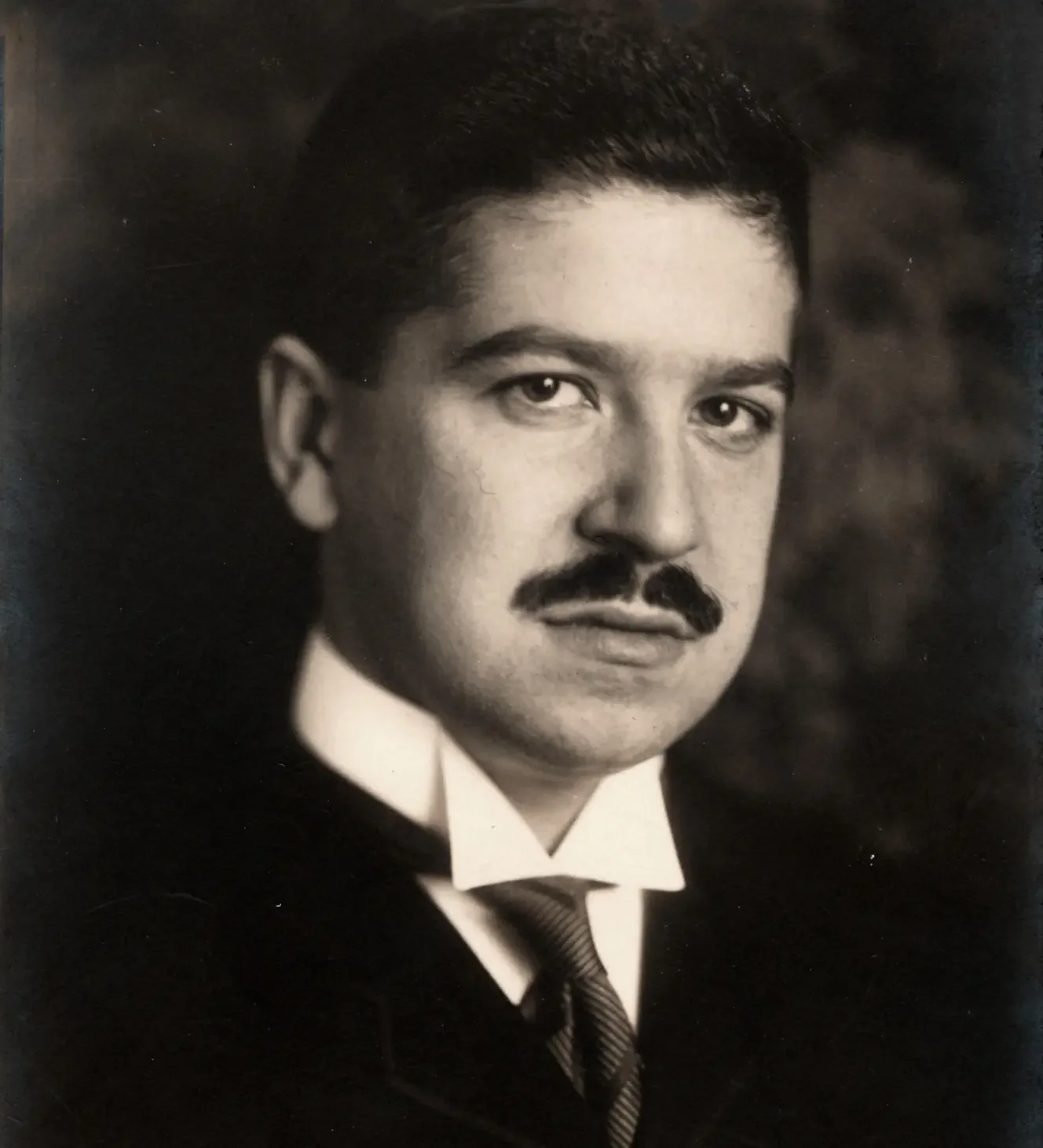
Artur Schnabel
Artur Schnabel
“It was a current which activated or released all the latent vitality in a student’s nature. It was addressed to the imagination, to taste, and to personal responsibility. It was not a blueprint or a shortcut to success. It did not give the student a prescription, but a task. What he arrived at was truthfulness of expression, and he would not tolerate any violation or deviation from what he felt to be true.”
“What I learned from Leschetizky himself, I am unable to say, to estimate, to appreciate. He succeeded in releasing all the vitality, élan, and sense of beauty a student had in his nature, and would not tolerate any deviation or violation of what he felt to be the truthfulness of expression. As you see, all this devotion, seriousness, care, and honesty are compatible with the virtuoso type represented by him. Why we, today, have in general a less flattering opinion of the virtuosos is a problem I recommend you to think about, again and again.”
“Leschetizky’s limitations showed in his comparative indifference to, or even dislike of, the kind of music which the ‘personal’ becomes just an ingredient of the universal. He had, for instance, not much use, or love, or curiosity, for the second half of Beethoven’s production. The more glory the music itself emanates, the less it leaves for the performer. It was such transcending music which he seemed to evade, by instinct. He saw music as a, so to say, public function. For him it was not music itself which gave to the musician, who took. For him the musician, as a person, was the giver, and he who listened took.”
“When Leschetizky…denied that I should ever be a pianist but that I was from the beginning apparently, a musician, he meant perhaps to indicate that my type ‘takes’ from music…I was one of a handful who never had to study Hungarian Rhapsodies by Liszt. I was quite pleased with this choice for me. He did not always like me. He was very strict with me, and sometimes even hard, yet he absolutely respected what he believed to be my musical disposition.” [3]
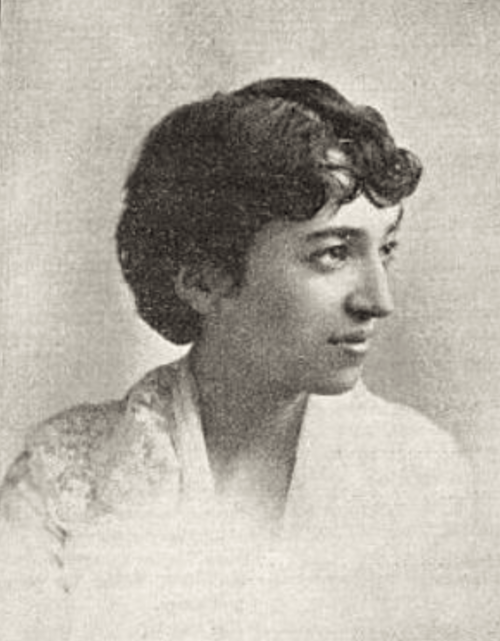
Fannie Bloomfield Zeisler
Fannie Bloomfield Zeisler
“…Speaking about teachers reminds me to put forth this caution: Do not pin your faith to a method.”
“We hear a great deal these days about the Leschetizky method. During the five years I was with Leschetizky, he made it very plain that he had no fixed method in the ordinary sense of the word.”
“Like every good teacher, he studied the individuality of each pupil and taught him according to that individuality. It might almost be said that he had a different method for each pupil, and I have often said that Leschetitzky’s method is to have no fixed method.”
“Of course, Leschetizky has his preference for certain works for their great educational value. He has his convictions as to the true interpretation to be given to the various compositions, but those do not form what may properly be called a method.”
“Leschetizky, without any particular method, is a great force by virtue of his tremendously interesting personality and his great qualities as an artist. He is himself a never-ending source of inspiration. At eighty, he was still a youth, full of vitality and enthusiasm. Practical illustration on the piano, showing ‘how not to do it,’ telling of pertinent stories to elucidate a point, are among the means which he constantly employed to bring out the best that was in his pupils.”
“The many books published upon the Leschetizky system by this assitants have merit, but they by no means constitute a Leschetizky system. They simply give some very rational preparatory exercises that the assistants give in preparing pupils for the master. Leschetizky himself laughs when one speaks of his ‘method’ or ‘system.’ [4]
Arthur Shattuck
“Leschetitzky did not merely tell a student to do this or that, or suggest a sunset, the reflection of a ruined temple in a pond, or the patriotic emotion that inspired a composition to be written - he showed the student clearly how to produce the effects which the composition demanded.”
“He discovered the students’ physical handicaps and found a remedy for them. He explained generously and specifically the art of obtaining (developing) a beautiful, singing tone, how to produce a big tone without hardness, and a pianissimo tone that would carry to the last row of the top gallery.”
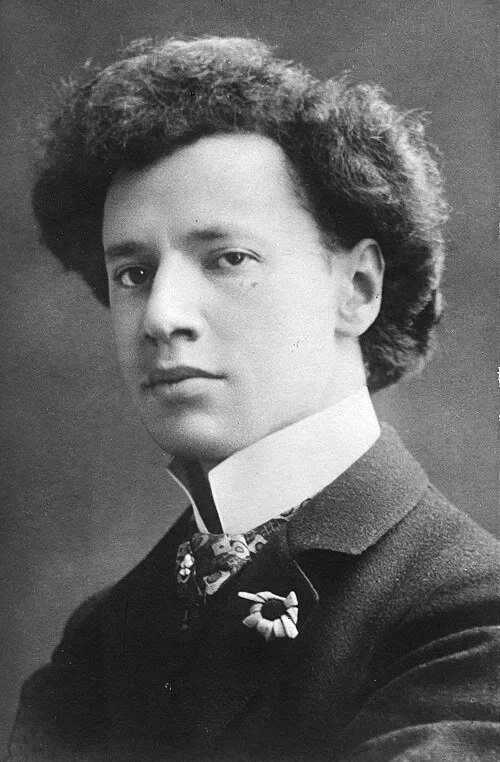
Ossip Gabrilowitsch
Ossip Gabrilowitsch
“The secret of Leschetizky’s far-reaching influence over his disciples lay as much in his musicianship as in the extraordinary power of his personality. Leschetizky’s name is one that excites the imagination of even the general public, and the phrase “Leschetizky method” has become an international catchword, almost like a commercial trademark.”
“But, as too frequently happens, people have a wrong conception of what this catchword means. For though, in a very broad sense, there may be said to be a ‘Leschetizky method’ of piano instruction, it is not what many people, even many musicians, believe it to be.”
“It most assuredly is not a set of manual exercises whose performance a given number of times a day is guaranteed to produce certain results, like a calisthenics routine for a budding athlete. Nor is it a system of fingering, hand positions, or anything mechanical. No. The ‘Leschetizky method’ might much more accurately be described as the Leschetizky attitude towards music and indeed towards life itself, and not merely something to be performed. Because of his ability to inspire in others that same attitude toward the most elusive of the arts, he became the supremely great teacher that he was.”
“What Leschetizky was principally concerned about was, first of all, the meaning of a composition as a whole, its poetic message and musical construction, then the beauty of tone with which it could be expressed. To that end, he demanded that we listen, listen, listen, and never be satisfied with a tone quality that was not exactly what we wanted. “
“ In spite of Leschetizky’s fiery temper, he had a heart full of kindness. He always regretted his irascibility and spared no effort to make the pupil forget it. I never knew a more generous man than he was.”
“Can there be a greater contrast than exists between Ignatz Friedmann and Artur Schnabel, or between Alexander Brailowsky and Fannie Bloomfield Zeisler? Yet they have all come from the same school. What a wizard must have been the man who succeeded in developing their musical and pianistic gifts without destroying that which is more precious than anything else in art - individuality!”
Annette Hullah
“Concentrated thought is the basis of his principles, the cornerstone of his method. Without it, nothing of any permanent value can be obtained, either in art or anything else. No amount of mechanical finger-work can take its place, and the player who repeats the same passage, wearily expectant that he will accomplish it in the process of time, is a lost soul on a hopeless quest.”
“Leschetizky enumerates the essential qualities of good work as follows: First, an absolutely clear comprehension of the principal points to be studied in the music on hand; a clear perception of where the difficulties lie, and of the way in which to conquer them; the mental realizations of these three facts before they are carried out by the hands.” [5]
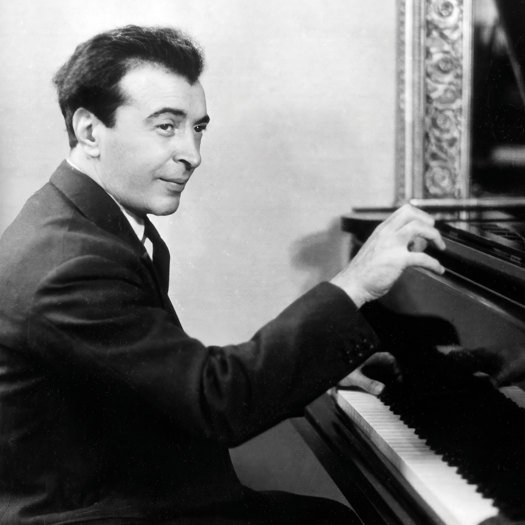
Benno Moiseiwitsch.
Benno Moiseiwitsch
“Whatever he did was intensely felt and shaped to that ideal: he made us think of the shape of the phrase, of the paragraph, of the composition. Each of the phrases in the dissecting process would be different and separately perfect. Put together, there was a sublime and unpredictable continuity of feeling about the piece as it took shape in one’s newly minted interpretation.”
“With him it was colour, and he tried to instill musicianship into the artist…naturally you have to have a certain technique as a means to an end, and that he kept emphasizing.”
“In my student days, when Leschetizky was dissatisfied with the way we turned a phrase, he would bid us leave the piano and walk about the room with our eyes shut until a new phrasing suggested itself. This way, we were allowed to play for him. I still follow this procedure, leaving the piano to think about a phrase which needs better shaping.” [6]
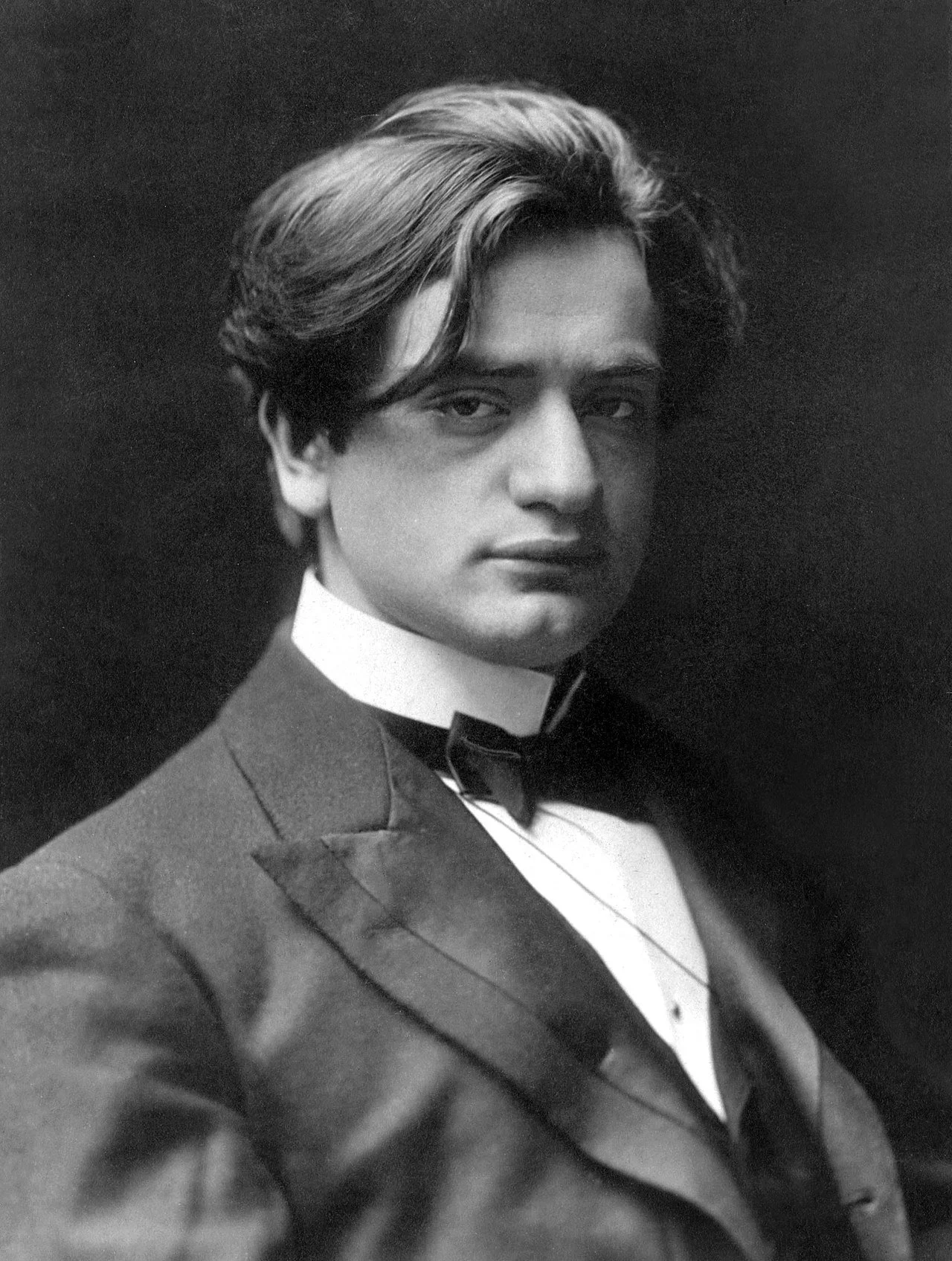
Mark Hambourg
Mark Hambourg
“It was from that great teacher, Leschetizky, that I learned most everything, not only pertaining to piano playing, but in regard to every aspect of how to live. As for a pianoforte lesson with him, it was a life experience, if one was capable of understanding what he wanted; and he had a wonderful way of explaining every detail with the utmost precision and care.”
“He was not only marvelous at developing facility and brilliance of execution in his pupils, but also focused his teaching enormously on the quality of sound produced. Everything had to be beautiful and polished with him, and alive with the right kind of expression and feeling. He never allowed anything to pass his judgment that was dull, monotonous, or harsh in tone production.”
References:
Ignace Jan Paderewski; The Paderewski Memoirs, p. 83-87.
Ethel Newcomb; Leschetizky as I Knew Him. p. 194.
Artur Schnabel; My Life and Music, p. 26-27.
Fannie Bloomfield Zeisler; Great Pianists on Piano Playing, James Francis Cooke, p. 83-85.
Annette Hullah; Leschetizky, p. 41.
Benno Moiseiwitsch; Great Pianists on Piano Playing, by James Francis Cooke, p. 277.